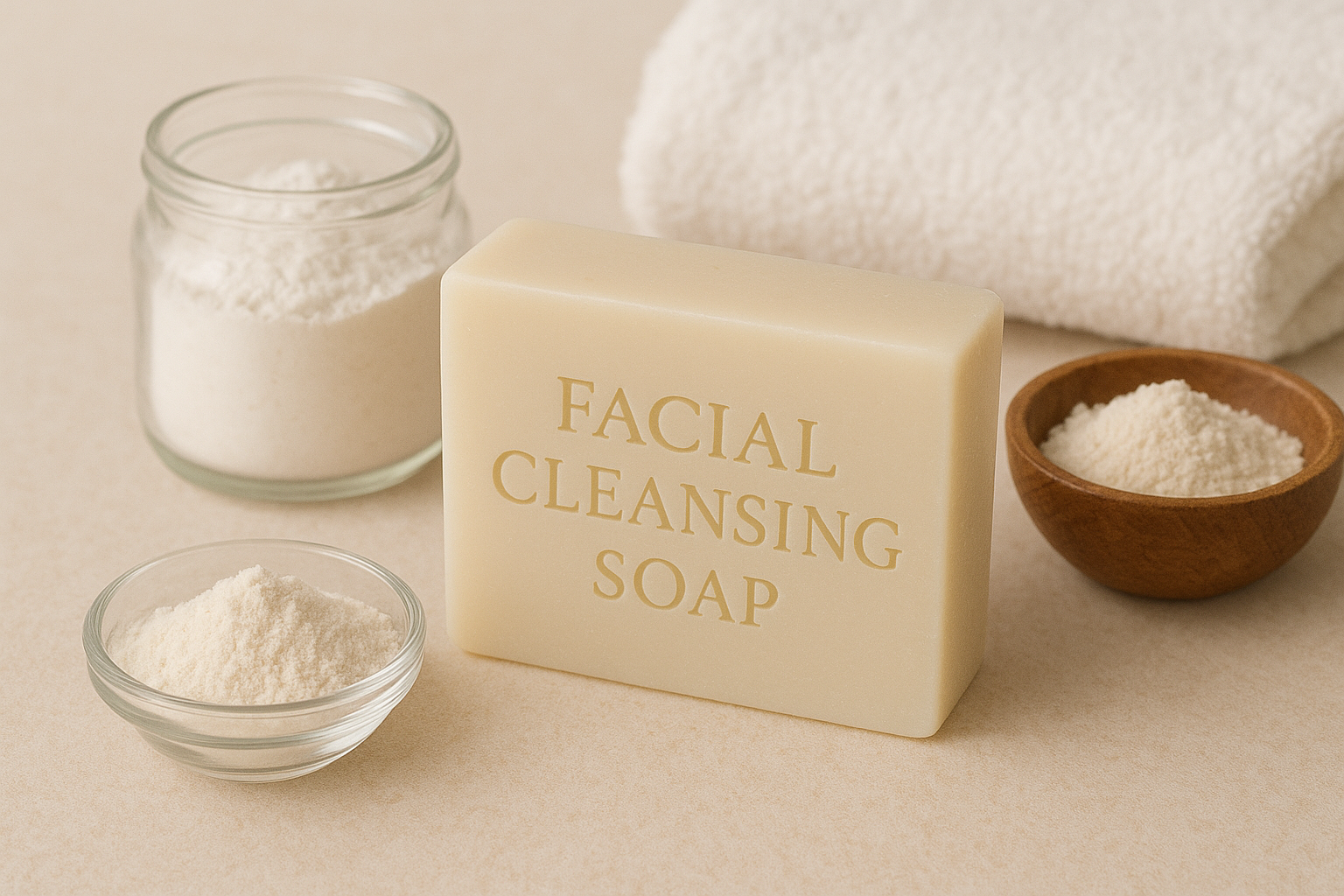
1. Ingredient Selection
The foundation of high-quality handmade soap starts with raw materials. Common ingredients include:
- Plant-based oils (olive oil, coconut oil, palm oil)
- Natural butters (shea butter, cocoa butter)
- Essential oils for fragrance
- Natural colorants like clays or botanical powders
Each ingredient is selected based on its skin benefits and final product performance.
2. Oil Blending and Lye Preparation
Soap making begins by carefully mixing oils with a sodium hydroxide solution (lye). This step is critical because it triggers the saponification process, where oils are transformed into soap.
Precision is essential to ensure safety and product quality.
3. Mixing and Saponification
Once the lye solution and oils are combined, they are blended until they reach “trace” — a pudding-like consistency.
At this stage, essential oils, herbs, or exfoliants can be added to enhance the soap’s function and fragrance.
4. Molding and Setting
The soap mixture is then poured into molds. It is left to solidify and undergo curing. Depending on the formulation, this can take 24–48 hours for initial setting.
5. Curing Process
After unmolding, the soap bars are placed in a curing area for 4–6 weeks. This allows excess water to evaporate, making the soap harder, longer-lasting, and milder on the skin.
6. Cutting, Inspection, and Packaging
Once fully cured, the soap is cut into bars, inspected for quality consistency, and packaged. Many premium brands use eco-friendly or customized packaging to enhance branding.
Conclusion
The handmade soap manufacturing process is a detailed journey that ensures every bar is natural, safe, and effective. From raw ingredients to final packaging, each step is carefully controlled to deliver high-quality skincare products.
For brands looking to enter the skincare market, partnering with an experienced OEM manufacturer like BUNJOIN can help turn ideas into successful products.