Introduction
In today’s skincare market, the debate between handmade soap vs. commercial soap continues to shape consumer choices. With more people paying attention to ingredient lists, environmental impact, and skin health, consumers are becoming selective about what they use daily.
The shift from synthetic, mass-produced soaps to natural, handmade alternatives reveals a deeper trend: a growing demand for transparency, quality, and sustainability. Understanding these preferences is key for brands and distributors looking to position themselves effectively in the competitive soap market.
1. Ingredient Transparency: Natural vs. Synthetic Soap
The most significant difference between handmade and commercial soaps lies in their ingredients.
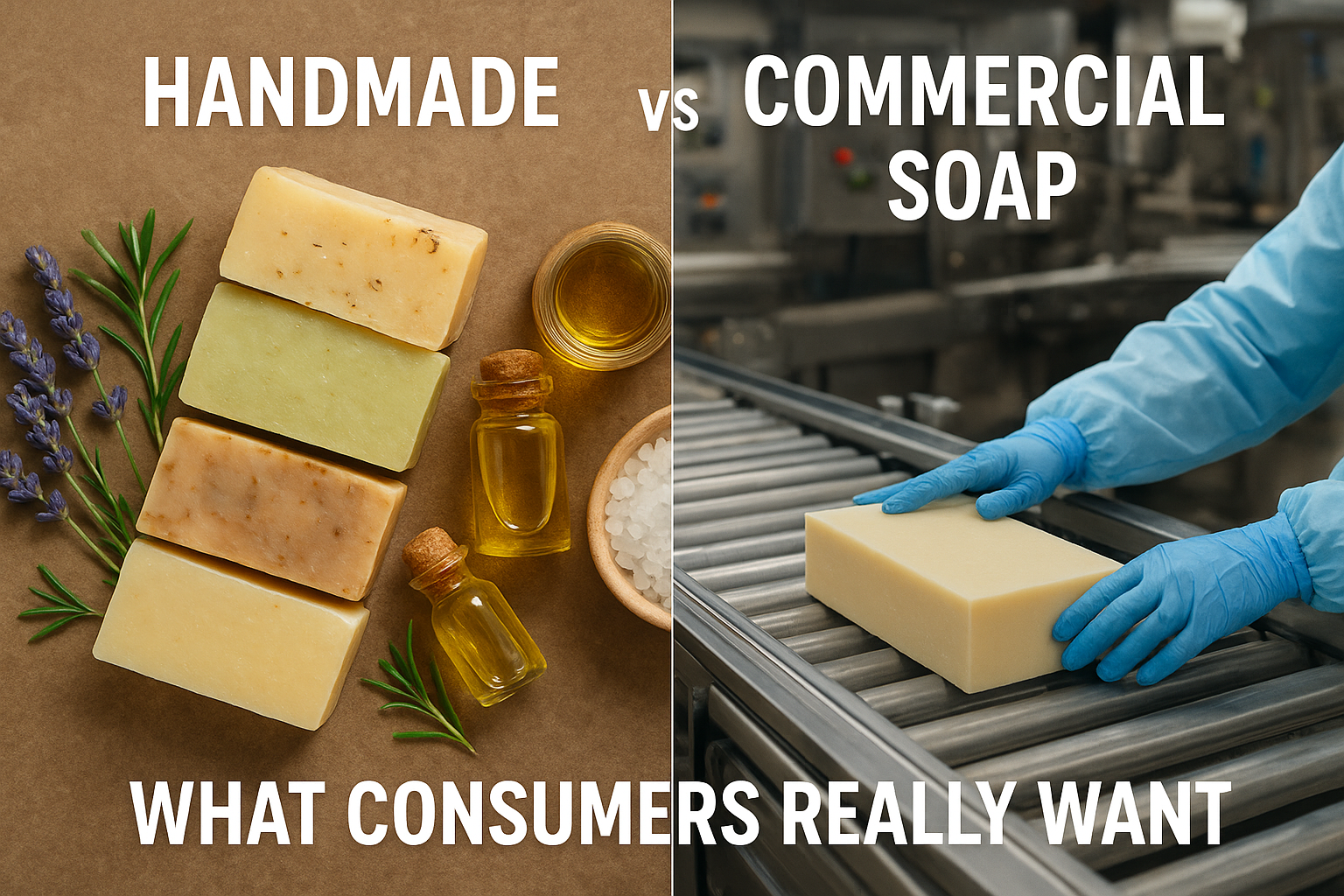
Commercial soaps are typically produced in large factories using synthetic detergents, artificial fragrances, and preservatives to enhance shelf life. These chemicals—such as sodium lauryl sulfate (SLS) or parabens—can strip the skin of natural oils, leading to dryness and irritation.
Handmade soaps, on the other hand, are made from plant-based oils and natural ingredients like olive oil, coconut oil, shea butter, and essential oils. These natural components gently cleanse the skin while maintaining hydration and nourishment.
✅ Consumers Prefer:
-
Simple, recognizable ingredients
-
Fewer synthetic additives
-
Naturally derived fragrances and colorants
2. Skin Benefits and Experience
Beyond cleansing, skincare consumers now seek products that deliver sensory and wellness benefits.
Handmade soaps are often enriched with natural glycerin—a moisturizing by-product of the soap-making process that is removed in most commercial production to be sold separately. As a result, handmade bars leave the skin soft and hydrated.
Additionally, the texture, aroma, and aesthetic of handcrafted soaps create a luxury experience that commercial soap brands struggle to replicate. Many consumers associate handmade soaps with self-care, authenticity, and craftsmanship.
Commercial soaps, while affordable and consistent, often lack these qualities. Their appeal lies in convenience and brand recognition rather than the sensory experience.
3. Sustainability and Ethical Considerations
Modern consumers—especially younger generations—make purchase decisions based on sustainability and ethics.
Handmade soap producers tend to emphasize:
-
Eco-friendly packaging (paper wraps, biodegradable boxes)
-
Cruelty-free testing
-
Zero-waste or small-batch production
In contrast, large-scale commercial soap manufacturing often relies on palm oil sourcing and plastic packaging, both of which raise environmental concerns.
A growing number of consumers now associate handmade soap brands with positive values such as sustainability, community support, and ethical production.
4. Price and Perceived Value
Price remains one of the few advantages for commercial soaps. Mass production allows for lower costs and wider availability. However, consumers are increasingly willing to pay more for high-quality, natural alternatives that align with their values.
In the long term, the perceived value of handmade soap—in terms of health benefits, craftsmanship, and eco-friendliness—outweighs the cost difference for many buyers.
This shift represents a major opportunity for handmade soap suppliers and OEM/ODM manufacturers to target premium and niche markets focused on clean beauty and sustainability.
5. Market Insights: Changing Consumer Preferences
Recent market research shows a steady global rise in natural and handmade soap demand, driven by health-conscious and eco-aware consumers.
Key trends include:
-
Growth of online artisanal soap brands selling directly to consumers
-
Rising demand for vegan and organic formulations
-
Expansion of private label natural soap lines by beauty retailers
For emerging soap brands, highlighting the story behind the product—such as handmade craftsmanship, natural ingredients, or ethical sourcing—can significantly boost trust and sales.
6. Brand Positioning Tips
To succeed in the “handmade vs. commercial” landscape, soap brands should:
-
Emphasize authenticity — Showcase handmade processes, artisan origins, and natural ingredients.
-
Educate consumers — Create transparent product pages that explain the difference between natural and synthetic soaps.
-
Use eco-conscious packaging — Reinforce your commitment to sustainability visually.
-
Leverage storytelling and content marketing — Share your brand’s mission and ethical production journey through blogs, videos, and social media.
Conclusion
The rising preference for handmade, natural soaps over commercial synthetic ones marks a fundamental change in consumer behavior. People are no longer just buying soap—they’re buying into a healthier, more sustainable lifestyle.
For brands and suppliers, this presents a golden opportunity to differentiate through authenticity, transparency, and quality.
As more consumers choose natural over synthetic, the future clearly belongs to brands that blend tradition with sustainability.