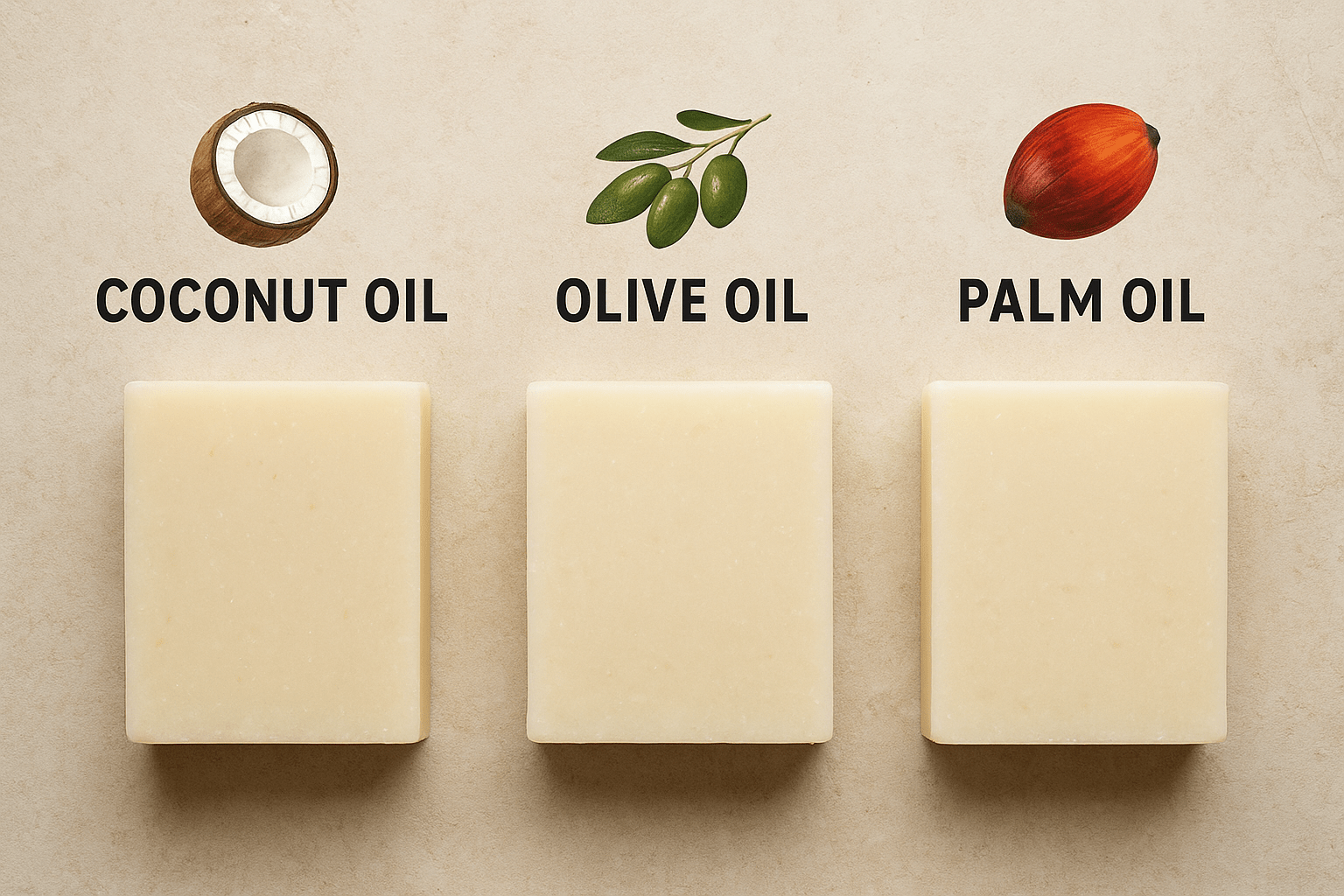
Handmade Soap Base Oils Explained: Coconut Oil, Olive Oil, and Palm Oil
When developing high-quality handmade soap—whether for a personal brand, private-label line, or large-scale B2B project—the choice of base oils determines most of the soap’s performance. Foam density, cleansing strength, hardness, gentleness, and moisturizing properties all depend on the selection and ratio of plant oils.
Among commonly used oils, coconut oil, olive oil, and palm oil are the most influential. Understanding their differences helps brands build formulas that match their target audience and product positioning—whether it’s gentle baby soap, luxury moisturizing bars, hotel amenities, or deep-cleansing bath soap.
Here is a detailed, factory-level guide for buyers and brand owners to choose the right oils for handmade soap OEM/ODM production.
1. Coconut Oil — High Cleansing Power & Rich Lather
Best For: Deep-cleansing bars, shower soaps, oily skin formulas, foamy bars, hotel soaps
Coconut oil is widely used due to its excellent saponification properties. When converted to soap, it creates a hard bar with bubbly and stable foam.
Key Benefits
-
Strong cleansing power, removing excess sebum and impurities
-
Produces rich, fluffy, fast-forming lather
-
Naturally hardens the bar, improving durability
-
Performs well even in cold or hard water
Usage Level
Typically 15–30% for gentle formulas or up to 70% for strong-cleansing soaps like dish bars or laundry soap.
Ideal Applications
-
Daily bath bars
-
Shampoo bars for oily hair
-
Hotel amenities requiring good foam
-
Artisan soaps with pronounced lather
2. Olive Oil — Gentle, Moisturizing & Skin-Friendly
Best For: Sensitive skin soaps, baby soap, luxury moisturizing bars, natural/organic products
Olive oil creates extremely gentle and nourishing soap. It produces a soft, creamy lather rather than bubbly foam.
Key Benefits
-
Highly moisturizing, rich in oleic acid
-
Supports skin barrier, ideal for dry or sensitive skin
-
Soft, creamy, lotion-like lather
-
Perfect for premium or organic-style formulations
Usage Level
Usually 40–70%. Pure olive oil soaps (Castile soaps) can reach 100% olive oil but require longer curing times.
Ideal Applications
-
Facial cleansing soap for sensitive skin
-
Organic or ECOCERT-style product lines
-
Baby soaps and fragrance-free soaps
-
Premium moisturizing bars
3. Palm Oil — Balanced Hardness & Stability
Best For: Mass production, balanced formulas, supermarket lines, consistent batch performance
Palm oil creates a hard, long-lasting bar with stable performance. It provides a balance between cleansing and moisturizing when combined with coconut and olive oils.
Key Benefits
-
Hard, long-lasting bars
-
Stable, creamy lather
-
Balanced cleansing and moisturizing profile
-
Consistent performance for large-scale production
Usage Level
Commonly 20–40% in cold-process and hot-process soaps.
Ideal Applications
-
Daily-use shower bars
-
Hotel soaps with consistent quality
-
Retail products with long shelf life
-
Bars requiring hardness without harshness
How to Combine Oils for Different Soap Products
1. Moisturizing & Sensitive-Skin Formula
-
Olive Oil 60%
-
Coconut Oil 20%
-
Palm Oil 20%
→ Creamy, gentle, perfect for premium skincare soaps
2. High-Foam Daily Bath Soap
-
Coconut Oil 40%
-
Palm Oil 40%
-
Olive Oil 20%
→ Rich foam, balanced cleansing, suitable for mass-market retail
3. Luxury Spa or Organic Brand Formula
-
Olive Oil 70%
-
Coconut Oil 20%
-
Specialty Oil 10% (argan, shea butter, cocoa butter)
→ High-end texture and moisturizing performance
4. Strong Cleansing Bar (Body & Utility Use)
-
Coconut Oil 60–70%
-
Palm Oil 30%
→ Strong degreasing, ideal for deep-clean bars
Why Base Oil Selection Matters for Your Brand
The base oil ratio directly affects:
-
Skin feel & customer satisfaction
-
Production stability and curing time
-
Cost efficiency for large-scale production
-
Marketing storytelling (e.g., “olive oil soap,” “coconut oil handmade soap”)
-
Target audience (oily skin, dry skin, sensitive skin, hotel guests, spa clients)
A well-structured formula enhances both performance and brand value, making your products competitive and trustworthy.
Conclusion
Understanding coconut oil, olive oil, and palm oil is crucial for creating high-quality handmade soaps. Whether your focus is gentle skincare, luxurious natural soap, hotel amenities, or mass-market retail, choosing the right base oils ensures excellent product performance, satisfied customers, and strong market positioning.
Professional OEM/ODM factories can help with formula design, scent selection, packaging, and bulk production, allowing your brand to create a customized, market-ready soap line.