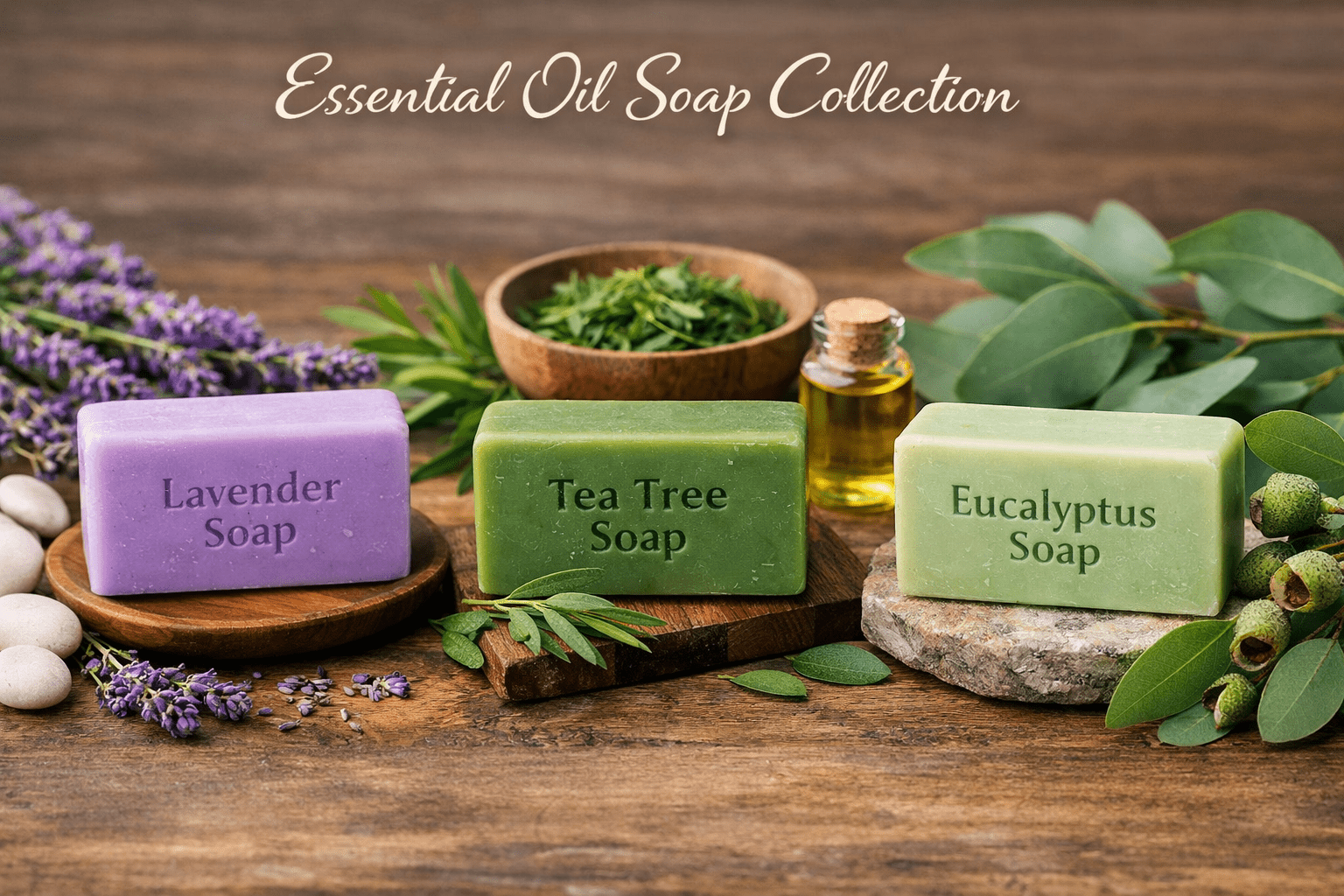
In recent years, essential oil soaps have become a key growth category in the personal care market. Consumers are no longer satisfied with basic cleansing — they are looking for functional, sensory, and skin-beneficial products. Among the most popular options, lavender, tea tree, and eucalyptus soaps stand out for their proven benefits and strong consumer recognition.
For brands and retailers, understanding the differences between these essential oil soaps is critical when developing product lines, positioning SKUs, and creating gift sets. In this article, we compare the benefits, suitable skin types, and market applications of lavender, tea tree, and eucalyptus soap — helping you choose the right products for your brand.
Why Essential Oil Soaps Are Trending
Essential oil soaps combine natural plant extracts with traditional soap-making techniques. Unlike synthetic fragrances, essential oils offer both aromatic value and functional skincare benefits, which makes them especially appealing in clean beauty, wellness, and premium gifting markets.
Key advantages of essential oil soap collections include:
-
Naturally derived fragrances
-
Multifunctional skin benefits
-
Strong storytelling and ingredient transparency
-
High acceptance in global markets
-
Ideal for private label and OEM customization
Among dozens of essential oils, lavender, tea tree, and eucalyptus remain the most commercially successful and versatile.
Lavender Soap: Calming & Skin-Soothing Classic
Core Benefits of Lavender Soap
Lavender essential oil is widely recognized for its calming and balancing properties. In soap formulations, it helps:
-
Soothe sensitive or irritated skin
-
Reduce dryness and tightness
-
Promote relaxation through aromatherapy
-
Support gentle daily cleansing
Lavender soap is often associated with stress relief, bedtime routines, and spa experiences, making it a strong choice for lifestyle-oriented brands.
Suitable Skin Types
-
Sensitive skin
-
Dry to normal skin
-
Mature skin
-
Stress-prone or reactive skin
Thanks to its mild nature, lavender soap is also suitable for family-friendly and unisex product lines.
Market & Gift Applications
Lavender soap performs exceptionally well in:
-
Spa and wellness collections
-
Hotel and resort amenities
-
Mother’s Day and relaxation-themed gift boxes
-
Subscription boxes focused on self-care
For brands, lavender soap offers broad appeal and low consumer education cost, making it a safe core SKU.
Tea Tree Soap: Deep Cleansing & Oil Control Solution
Core Benefits of Tea Tree Soap
Tea tree essential oil is known for its purifying and antibacterial properties. When used in soap, it helps:
-
Deeply cleanse pores
-
Control excess oil production
-
Reduce breakouts and impurities
-
Maintain a fresh, clean skin feel
Tea tree soap is often positioned as a problem-solving product, especially for oily and acne-prone skin.
Suitable Skin Types
-
Oily skin
-
Acne-prone skin
-
Combination skin
-
Men’s skincare users
Due to its stronger cleansing action, tea tree soap is commonly formulated with balancing plant oils to prevent over-drying.
Market & Gift Applications
Tea tree soap is ideal for:
-
Men’s grooming collections
-
Sports and active lifestyle brands
-
Teen and young adult skincare lines
-
Functional skincare gift sets
From a B2B perspective, tea tree soap works well as a hero product for targeted skin concerns, supporting higher perceived value.
Eucalyptus Soap: Refreshing & Revitalizing Experience
Core Benefits of Eucalyptus Soap
Eucalyptus essential oil is valued for its refreshing scent and invigorating properties. In soap applications, it provides:
-
A cooling, revitalizing skin sensation
-
Odor-neutralizing benefits
-
A feeling of freshness and clarity
-
Aromatherapy support for breathing comfort
Eucalyptus soap is especially popular in morning routines and post-exercise cleansing.
Suitable Skin Types
-
Normal to oily skin
-
Active individuals
-
Urban consumers exposed to pollution
-
Users seeking a refreshing sensory experience
Its clean and sharp aroma appeals strongly to male and unisex markets.
Market & Gift Applications
Eucalyptus soap fits perfectly into:
-
Sports and fitness collections
-
Men’s personal care gift sets
-
Summer or travel-themed bundles
-
Hospitality and gym amenities
For brands, eucalyptus soap offers a distinct sensory identity that differentiates it from floral or herbal options.
Comparing Lavender, Tea Tree & Eucalyptus Soaps
| Essential Oil | Main Function | Skin Type | Market Position |
|---|---|---|---|
| Lavender | Calming & soothing | Sensitive, dry | Wellness & relaxation |
| Tea Tree | Purifying & oil control | Oily, acne-prone | Functional skincare |
| Eucalyptus | Refreshing & revitalizing | Normal, oily | Active lifestyle |
By offering all three, brands can create a complete essential oil soap series that covers multiple skin needs and consumer preferences.
Essential Oil Soap Gift Set Strategies
Combining lavender, tea tree, and eucalyptus soaps into curated gift sets is a proven way to increase average order value and seasonal sales.
Popular gift bundle ideas include:
-
Relax & Balance Set: Lavender + moisturizing base oils
-
Clear & Fresh Set: Tea Tree + Eucalyptus
-
Complete Wellness Trio: Lavender + Tea Tree + Eucalyptus
Gift sets work especially well during holidays, corporate gifting seasons, and subscription programs.
OEM & Private Label Opportunities
For brands sourcing from professional soap manufacturers, essential oil soap lines offer excellent OEM and ODM flexibility, including:
-
Custom essential oil concentrations
-
Cold-process or triple-milled options
-
Vegan and palm-oil-free formulations
-
Custom scents and blend variations
-
Eco-friendly and gift-ready packaging
This flexibility allows brands to align products with clean beauty, sustainability, or luxury positioning.
Conclusion
Lavender, tea tree, and eucalyptus soaps each bring unique benefits, sensory experiences, and market opportunities. Whether your brand focuses on relaxation, problem-solving skincare, or active lifestyles, an essential oil soap collection provides a versatile and high-demand product category.
By clearly positioning each soap based on skin type, function, and gifting use, brands can build a strong, scalable product line that resonates with modern consumers worldwide.