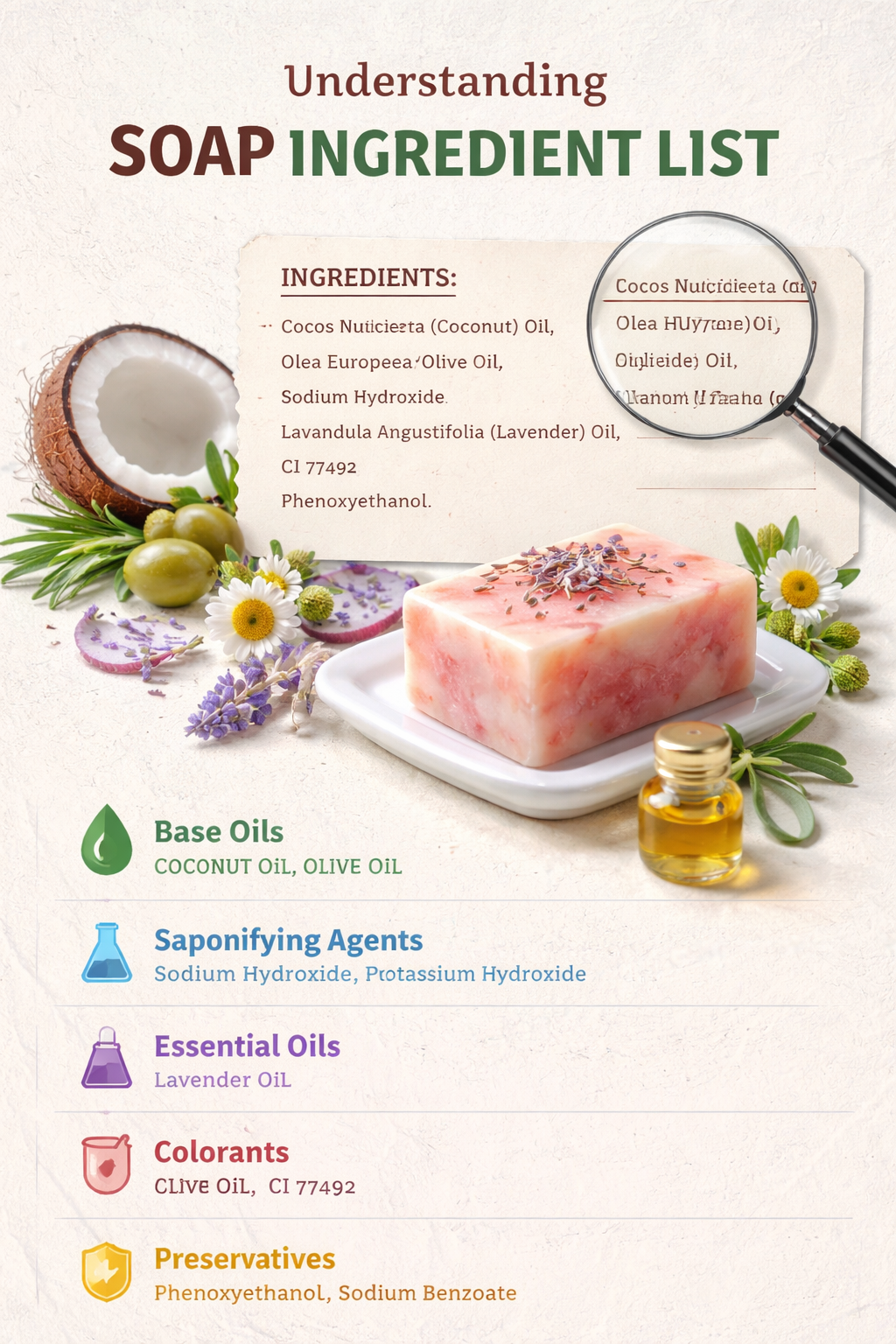
How to Read a SOAP Ingredient List: Essential INCI Knowledge for Brands
In today’s market, where consumers increasingly care about product safety and ingredient transparency, soap brands must know how to correctly read an ingredient list. Whether it’s handmade soap, natural soap, or functional soap, the ingredient list not only reflects the formulation but also affects regulatory compliance and customer trust. This article will guide brands through understanding soap ingredient lists, INCI labeling standards, and the importance of ingredient transparency.
1. What Is a Soap Ingredient List?
A soap ingredient list, usually found on packaging or a brand website, details all ingredients in a product. Brands should focus on the following points:
-
Order of Ingredients: According to the International Nomenclature of Cosmetic Ingredients (INCI) standards, ingredients must be listed in descending order of concentration. Ingredients present at less than 1% can be listed in any order.
-
Ingredient Types: Lists may include base oils, foaming agents, fragrances, colorants, and preservatives. Understanding each type helps assess the soap’s performance and safety.
-
Labeling Standards: INCI is a global standard recognized by the EU, US, Japan, and other markets, ensuring ingredient transparency and international compliance.
2. Common Soap Ingredients and Their Functions
Understanding an ingredient list requires identifying different types of raw materials:
-
Base Oils
-
Examples: Coconut Oil, Olive Oil, Palm Oil
-
Function: Provide foam, cleansing, and moisturizing effects. Coconut oil produces rich lather, olive oil is gentle and moisturizing, and palm oil makes the soap harder and long-lasting.
-
-
Saponifying Agents
-
Commonly NaOH (Sodium Hydroxide) or KOH (Potassium Hydroxide)
-
Function: Convert oils into soap through saponification. Knowing the type helps determine skin compatibility.
-
-
Functional Additives
-
Includes essential oils, plant extracts, vitamins, and glycerin
-
Function: Add fragrance, skincare benefits, or color. Natural essential oils are preferred by consumers and can enhance product differentiation.
-
-
Fragrances and Colorants
-
Typically listed as “Fragrance” or “CI + number”
-
Function: Provide scent or visual appeal. Brands must follow regulations and consider allergy risks.
-
-
Preservatives
-
Examples: Phenoxyethanol, Sodium Benzoate
-
Function: Extend shelf life. Solid soaps usually require low amounts, but clear labeling ensures compliance and consumer trust.
-
3. INCI Naming and Ingredient Transparency
INCI naming is a globally recognized standard. Brands must:
-
Ensure Label Compliance: Use official INCI names, avoiding local or self-invented names, to make products market-ready internationally.
-
Build Consumer Trust: Modern consumers check ingredient lists for safety; transparent INCI labels increase confidence.
-
Support Marketing Claims: Clear ingredient functions allow scientific promotion, e.g., “Coconut Oil for rich foam” or “Natural essential oils for skin soothing.”
4. How Brands Can Read Ingredient Lists Scientifically
-
Analyze Concentration: The top five ingredients usually define the soap’s main characteristics, such as cleansing, moisturizing, or foaming.
-
Distinguish Natural vs. Synthetic Ingredients: Base oils and plant extracts are natural, while synthetic fragrances or preservatives are chemical.
-
Identify Potential Allergens: Common allergens include citrus essential oils, some colorants, and preservatives. Brands can add “may cause allergic reactions” notes to enhance safety.
-
Align with Market Position and Regulations: High-end natural soaps can emphasize natural oils and essential oils; low-sensitivity handmade soaps can highlight gentle formulations. Regulations in different markets influence ingredient list presentation.
5. Conclusion
A soap ingredient list is more than a regulatory requirement—it is a communication bridge between brands and consumers. By mastering INCI standards and understanding base oils and functional additives, brands can interpret ingredient lists, optimize formulations, and convey a safe, transparent image.
In today’s global market, ingredient transparency is the foundation of consumer trust. Brands that understand INCI and provide clear ingredient information are more likely to attract loyal customers and succeed in competitive markets.