The Visual Magic: A Soap Transparency Revolution
Have you ever been captivated by the crystal-like appearance of transparent soap? Among countless personal care products, transparent soap stands out with its unique visual appeal, making it a favorite in the high-end skincare market. But have you ever wondered: Why is ordinary soap opaque and milky white, while transparent soap is as clear as amber? The answer lies not only in technological innovation but also in the precise science of materials engineering.
Why Ordinary Soap Is Opaque: Secrets of the Microscopic World
To understand the clarity of transparent soap, we must first explore the origins of ordinary soap’s opacity.
Ordinary soap is produced through the saponification of fats and alkalis, primarily forming sodium (or potassium) salts of fatty acids. At the microscopic level, these soap molecules spontaneously arrange into crystalline structures, creating countless tiny crystals. When light strikes these crystals, it undergoes repeated refraction and scattering at the interfaces between different crystals—much like how light disperses through tiny water droplets in fog. This scattering effect gives soap its opaque, milky-white appearance.
Additionally, the glycerin (a natural byproduct of saponification) in ordinary soap is often extracted during later processing, further enhancing its opacity. The absence of glycerin not only affects transparency but also reduces the product’s moisturizing properties.
The Science of Transparent Soap: A Tripartite Light-Transmission System
The crystal-clear quality of transparent soap stems from a meticulously designed formulation system that enables straight light passage through three key elements:
1. High-Purity Glycerin: The “High-Speed Pathway” for Light
The most distinctive feature of transparent soap is its retention of complete glycerin content, often supplemented with additional high-purity plant-derived glycerin (10%-25%). Glycerin, a polyol, exhibits strong hygroscopicity and light transmission. At the microscopic level, glycerin molecules insert themselves between soap molecule lattices, disrupting crystalline continuity, reducing crystal interfaces, and minimizing light scattering. Glycerin acts as a transparent “light channel” within the crystalline network, allowing light to pass through the soap more directly.
2. Alcohol-Based Solvents: The “Deconstructors” of Crystalline Structures
Beyond glycerin, transparent soap formulations include clarifying agents such as ethanol, sugar, or sorbitol. These substances dissolve some soap molecules, forming a uniform colloidal solution rather than crystalline aggregates. During heating, they disrupt the orderly arrangement of soap molecules, preventing the formation of large crystals. After cooling and solidification, the system forms a microcrystalline or amorphous structure that minimally interferes with light.
3. Precise Refractive Index Matching: Light’s “Invisibility Cloak”
The ultimate secret of transparent materials lies in refractive index control. When different materials have closely matched refractive indices, light experiences minimal refraction and reflection at their interfaces. Transparent soap achieves this by precisely balancing glycerin (refractive index ~1.47), soap base (~1.44-1.48), and other components, creating a highly uniform average refractive index across the system. In this “refractive index matching” state, light passes through different media as if traveling through a single homogeneous substance, resulting in visual clarity.
Transparent Soap Production: The Art of Temperature and Time Control
Transparent soap manufacturing demands exceptional precision in process control, involving three critical stages:
Stage 1: Precise Saponification
High-quality plant oils (e.g., coconut, palm, olive oil) react with food-grade sodium hydroxide solution under precise temperature control (70-80°C) to achieve complete saponification. Unlike ordinary soap production, transparent soap requires more thorough saponification to ensure minimal residual free alkali or unsaponified oils, as impurities can compromise final clarity.
Stage 2: Clarification Treatment
This is the core technological phase. Soap base is cut into small pieces, then combined with precisely measured glycerin, ethanol, and syrup. Under gentle heating (60-70°C) and continuous stirring, the mixture transforms into a uniform, viscous gel. This stage requires strict control:
-
Temperature must not exceed 80°C to prevent alcohol evaporation and sugar caramelization
-
Stirring speed must remain consistent to avoid air bubble incorporation
-
Adequate time (typically 2-4 hours) ensures complete homogenization
Stage 3: Molding and Curing
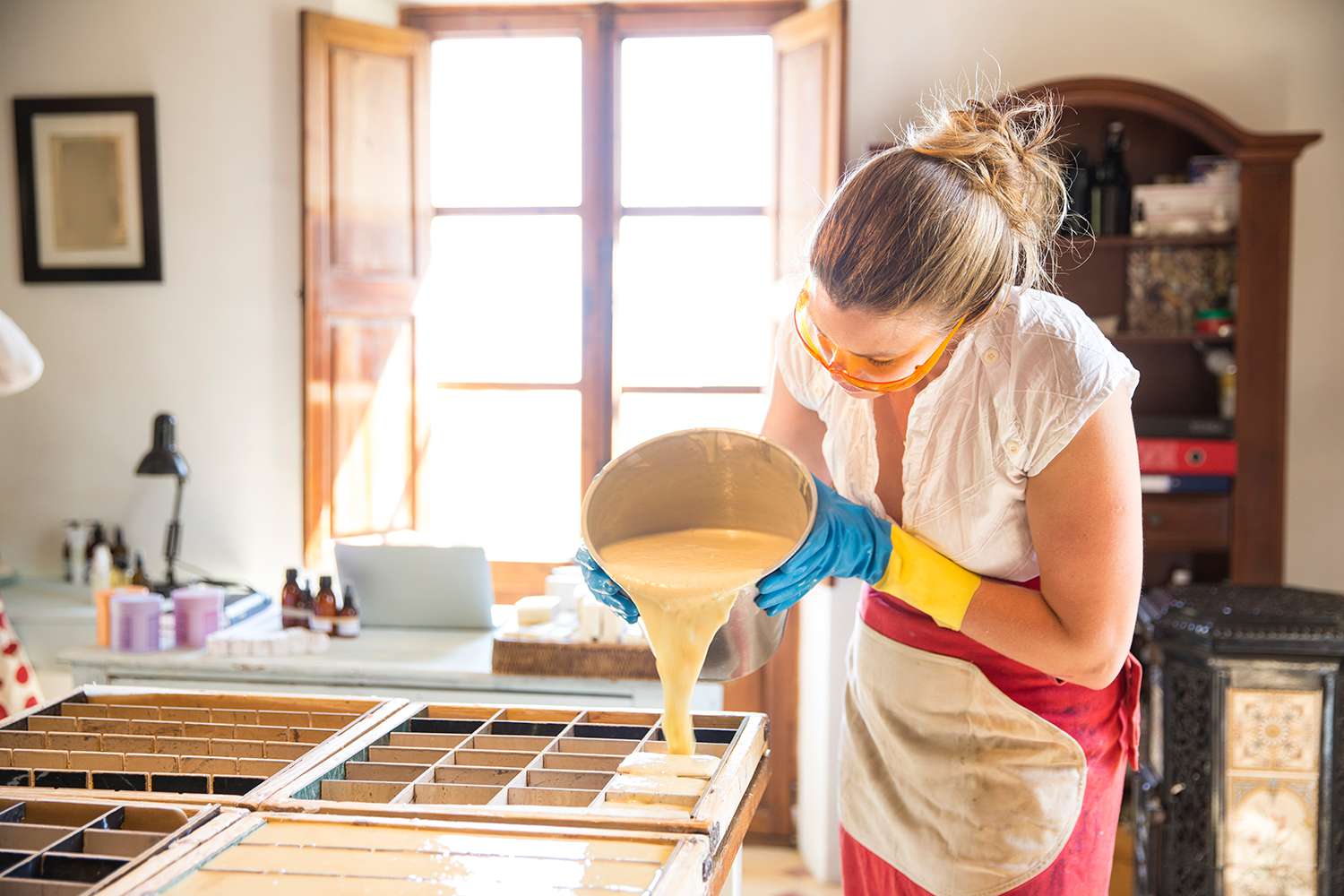
The transparent soap solution is poured into precision molds and slowly cooled in a constant-temperature environment (20-25°C) for 24-48 hours. Unlike ordinary soap’s rapid cooling, slow cooling allows orderly molecular arrangement, preventing micro-cracks or cloudiness caused by internal stress. The curing phase requires 2-4 weeks in a ventilated, dry environment, allowing residual trace moisture and alcohols to evaporate naturally. Transparency gradually improves during curing, reaching optimal levels.
The Multifaceted Advantages of Transparent Soap: Beyond Visual Appeal
Transparent soap offers value far beyond its aesthetic appeal:
1. Superior Moisturizing Properties
High glycerin content endows transparent soap with exceptional moisturizing capabilities. Glycerin absorbs moisture from the air, forming a hydrating layer on the skin’s surface, leaving it soft rather than dry and tight after washing. In contrast, ordinary soap often leaves skin feeling “squeaky clean” due to glycerin extraction.
2. Gentle Cleansing Experience
Transparent soap’s uniform molecular structure produces finer, more stable lather during dissolution. This foam is gentler on the skin, reducing friction and irritation during cleansing. Its pH typically ranges between 7-8.5, close to neutral, making it suitable for various skin types.
3. Artistic and Functional Gift Value
The transparent medium enables limitless creative possibilities:
-
Embedded Decorations: Flowers, leaves, and colored soap granules display beautifully within the transparent matrix
-
Layering Artistry: Multiple transparent layers create gemstone-like visual effects
-
Custom Shapes: Intricate mold details remain visible, enhancing product sophistication
-
Long-Lasting Fragrance: Essential oils and scents disperse evenly within the transparent base, releasing fragrance more consistently
Transparent Soap vs. Ordinary Soap: Comprehensive Comparison
| Feature | Ordinary Soap | Transparent Soap |
|---|---|---|
| Appearance | Opaque, milky white | Transparent/luminous, crystal-clear |
| Glycerin Content | <5% (typically extracted) | 15%-25% (additional supplementation) |
| Moisturizing Ability | Moderate, may cause dryness | Excellent, leaves skin smooth |
| Production Process | Relatively simple, lower energy consumption | Complex, requires precise temperature/time control |
| Material Cost | Lower | Higher (additional glycerin, sugar alcohols, etc.) |
| Solidification Time | Rapid cooling, ≤24 hours | Slow cooling, 24-72 hours |
| Bubble Control | Bubbles have minor impact | Complete deaeration required; even micro-bubbles affect clarity |
| Market Positioning | Mass-market daily cleansing | Premium, gift-oriented, specialized skincare |
How to Identify High-Quality Transparent Soap
-
Observe Clarity: Premium transparent soap should be uniformly clear, without cloudiness, haze, or flocculents
-
Check Texture: Surface should be smooth and even, free of cracks, bubbles, or deformations
-
Test Firmness: Moderately firm with slight elasticity under pressure, not rock-hard
-
Assess Scent: Natural, subtle fragrance without sharp alcohol or chemical odors
-
Evaluate Performance: Rich, fine lather that rinses easily, leaving skin non-stripped
Future Trends: Technological Innovations in Transparent Soap
As technology advances, transparent soap is evolving toward greater sustainability and multifunctionality:
-
100% Bio-Based Formulations: Utilizing sustainable plant-derived glycerin and sugar alcohols
-
Functional Transparent Soaps: Incorporating natural active ingredients (e.g., aloe, green tea extract) while maintaining clarity
-
Intelligent Temperature-Controlled Production: Automated systems ensuring batch-to-batch consistency
-
Biodegradable Packaging: Full-cycle green design aligned with product sustainability
Conclusion: From Cleaning Tool to Lifestyle Artistry
The emergence of transparent soap elevates daily cleansing products to a new realm where science meets aesthetics. It is not merely a triumph of chemical engineering but also a reflection of humanity’s pursuit of a better life. A high-quality transparent soap gently cleanses the skin, serves as an elegant decor piece enhancing living spaces, and functions as a heartfelt gift conveying emotion.
The next time you use transparent soap, take a moment to appreciate its amber-like texture and the scientific ingenuity and artisanal craftsmanship it embodies. Within this small, transparent world lies an unwavering commitment to quality and a profound understanding of lifestyle aesthetics